
Home / Holes, cracks and texture matching
Hole, Crack and Texture Repair in Leavenworth
A hole the size of a doorknob, a crack above a window, a row of nail pops after a dry winter: these are the everyday wall problems, and every one of them is solvable. The part that takes skill is making the repair vanish into the texture around it.
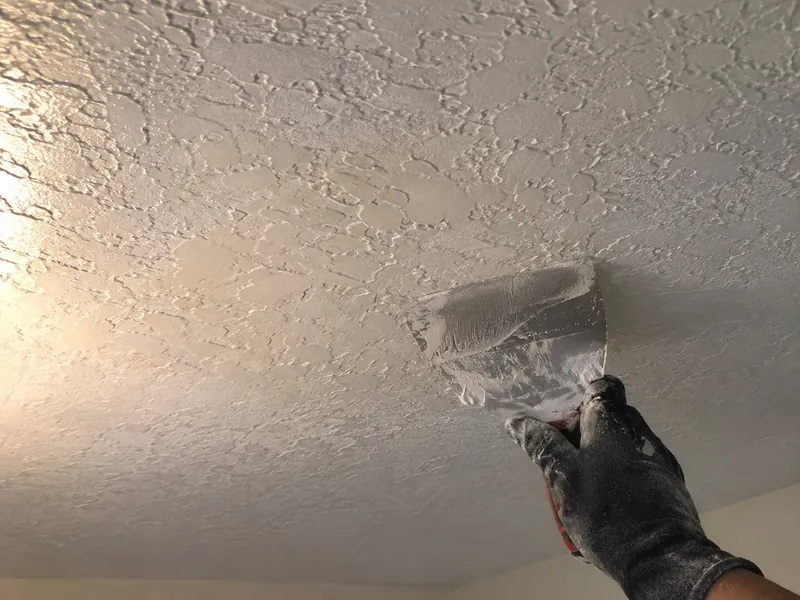
Texture is the real puzzle
Mid-century and newer homes in Leavenworth, including the many built around the city's 1969 median, tend to carry textured walls and ceilings. Orange peel and knockdown are the two we see most. A flat, painted patch on a textured wall is easy to spot, which is why we treat texture as its own step and not an afterthought.
Matching is partly craft and partly patience. We test the texture on a scrap panel, compare it in raking light, and adjust the mix and spray until it reads the same as its neighbor. Where a wall has been painted many times, we also match the sheen.
Common problems and what causes them
Doorknob and furniture holes. Doors that swing without a stop punch a round hole in the wall. In a town where about 48 percent of occupied homes are rented, these are very common at turnover. Small ones take a patch and compound, larger ones need backing.
Settling cracks. Seasonal swings between cold winters and hot summers move a house slightly, and cracks often show up at the corners of doors and windows, or along ceiling seams. Narrow cracks are cosmetic. We widen them a little, bridge them with tape and finish.
Nail and screw pops. Small circles that rise in the paint are fasteners backing out as framing dries and shifts. We re-secure them and skim over.
Corner bead and edge damage. Outside corners take hits from furniture and vacuums. We replace dented bead and finish it flush.
How we repair a hole
- Size it up: pinhole, fist-size, or bigger
- Cut the opening square and clean its edges
- Back it with a stable piece so the patch has something to bond to
- Set a patch, tape the seam and spread compound in thin coats
- Sand between coats, feathering the edge outward
- Prime, then match texture, then leave it ready to paint
Patience is the difference here. Rushed compound shrinks, cracks or shows a halo.
Before we arrive
- Look for the pattern: if the same spot keeps cracking, tell us
- Clear a small work area and cover floors
- Locate leftover paint or the color name
- Note whether a texture is orange peel, knockdown or smooth
- Photograph the problem area in daylight, which helps us bring the right materials
Cracks worth watching
Most cracks are harmless, but a few deserve a closer look. A crack wider than a pencil line, one that steps diagonally from a door corner, or one that keeps reopening after repair can mean ongoing movement. We will tell you what we see, repair the surface and suggest who to ask if the cause looks bigger than drywall.
Quick answers: holes, cracks and texture matching
Can you match a texture I do not know the name of?
Yes. Send a photo in daylight, or show us the wall. We test a sample and compare it before touching the real surface.
Do nail pops come back?
Not often once the fastener is properly re-secured. A pop that returns repeatedly suggests framing movement and we will say so.
Is a hairline crack in a new-ish house serious?
Usually not. They are typically seasonal. A crack that widens, or one that sticks a door, is worth a second opinion.
Do I need to repaint after a repair?
A patch needs paint. We prime and texture it, and we can recommend whether a touch-up or a full wall will give the best match.
Ready when you are
Call or text, or request a callback, and tell us your dates.