
Home / Ceiling leaks and water stains
Ceiling Leak and Water Stain Repair in Leavenworth
A brown ring on the ceiling is alarming, but it is a solvable one. The order matters: find the water, stop it, let the area dry, then repair. We handle the drywall part, and we will tell you plainly when something else needs attention first.
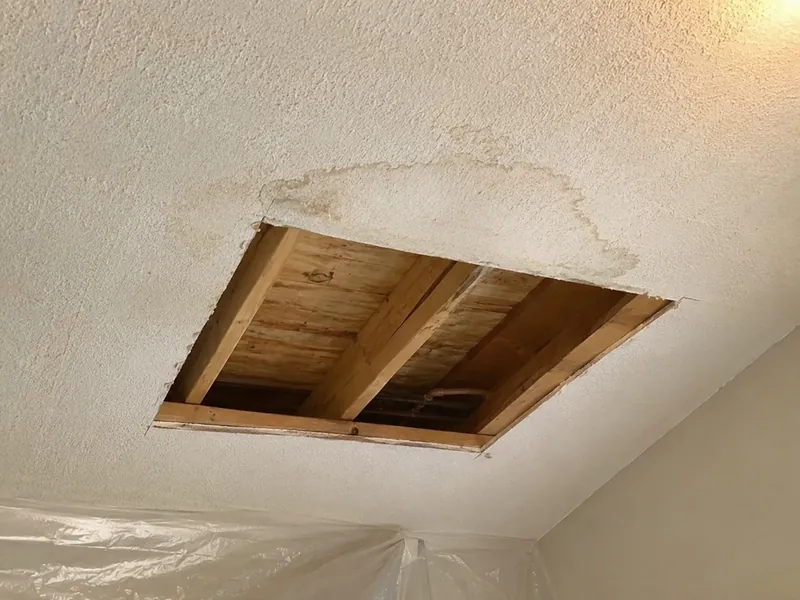
Start with the source
Drywall cannot be repaired over a leak that is still running. Before we cut anything we ask where the water came from and whether it is stopped. Roof leaks, plumbing leaks and bathroom overflows each leave a different pattern. A stain that grows after rain suggests the roof or flashing. A ring below a bathroom often means a supply line, a drain or a tub seal. A stain that appears in dry weather points to plumbing.
Leavenworth gives water plenty of chances. The weather swings between hot summers and cold winters, so roofs and flashings work hard. Roughly 28 percent of local homes are older than 1940, and the median home dates to about 1969, so many roofs, vent pipes and supply lines have been through a lot of seasons. Older renovated homes can hide old repairs above the ceiling as well.
Signs of a ceiling that cannot wait
- A bulge or sag that holds water, which can drop suddenly
- A soft, spongy feel when you press lightly near the stain
- Paint bubbling or peeling in a ring
- A musty smell near the stain
- Drips that return after rain or after someone showers upstairs
- Cracks with brown edges, or board seams that have split
If water is actively coming through, keep people and belongings clear and call a plumber or roofer first. A sagging ceiling that is holding water should be relieved by a professional or with great care, and we are happy to talk you through safe steps on the phone.
What we do once the water is stopped
Our process is straightforward:
- Probe the area to find where the board is wet, soft or stained through
- Cut out the damaged section back to dry, sound material and clean framing
- Allow the area to dry thoroughly before closing it up
- Install new board, tape the seams and finish in coats
- Prime with a stain-blocking primer so the mark does not return through the paint
- Match any ceiling texture
We remove wet or damaged material rather than paint over it, because that is the only way a ceiling stays repaired.
A word on mold
If you see dark spotting, or the smell is persistent, the area may need a look from a qualified specialist before any repair. Drywall repair is not mold remediation, and we do not offer that service. What we can do is cut out the wet board and replace it once the cause is solved and a specialist has cleared the area, where that is needed.
Before we arrive
- Stop the water at the source and confirm with your plumber or roofer
- Move furniture and cover floors under the damaged area
- Photograph the stain, because it helps your insurer and helps us
- Run a fan or dehumidifier near the area if it is safe to do so
- Mark the edge of the stain with a pencil, so we can see if it has grown
Quick answers: ceiling leaks and water stains
Can you just paint over a stain?
A stain blocker can hide an old, dry mark, but it should never go over a wet or active one. We check moisture first and cut out board that is damaged.
How long should the ceiling dry before you repair it?
It depends on how wet the area got and the weather. We check it rather than guess, and we will not close up board that is still damp.
What if the ceiling is textured?
We match it with a sprayed or stippled texture after the patch has set.
Will you fix the roof or the pipe?
No. We repair the ceiling. If you need a roofer or plumber, we recommend finding one before we start so the repair lasts.
Ready when you are
Call or text, or request a callback, and tell us your dates.